

Additionally, blockchains operate on a distributed system, where data is stored across multiple nodes rather than one central location — reducing the risk of a single point of failure. Blockchains such as Ethereum show how a public permissionless blockchain can be used as a highly secure and reliable distributed computer for processing conditional agreements known as smart contracts. This capability has enabled an entirely new financial ecosystem of permissionless, transparent financial services known as decentralized finance (DeFi). Because it’s a distributed ledger, all participating computers on a network have access to the same database (the blockchain itself). This increases transparency and access, and the hash history makes every exchange and transaction traceable.
Application Security
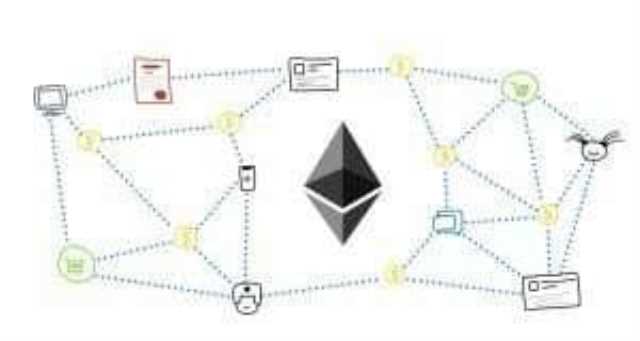
It is based on the principles of peer-to-peer transactions, hashes, and digital signatures. Without blockchain protocols, the crypto industry would not be where it is today. It includes various decentralized applications (dApps) such as decentralized finance (DeFi) platforms like Uniswap, PancakeSwap, and NFT marketplaces like NBA Top Shot. This concept symbolizes permanence and transparency in marriage, which relates well to modern-day couples.
How does blockchain technology work?
Several projects are using the blockchain as a global public registry for assets. Through a smart contract, developers can create a unique non-fungible token (NFT) that represents ownership of a real-world asset such as a building, car, rare trading card, or more. Blockchains provide authenticity to asset ownership, transparent tracking of an asset’s life cycle, and global liquidity to previously illiquid assets. Pending transactions are grouped together into “blocks”, where they are processed and validated by each node in the network. Having each node check each transaction ensures that changes to the ledger are redundantly validated, making it nigh impossible to make malicious changes to the ledger or state of the network. For a transaction to be valid, the digital signature must be correct and the public key must have sufficient funds to cover the transaction.
History of Blockchain
- Motivations for adopting blockchain technology (an aspect of innovation adoption) have been investigated by researchers.
- Blockchains can serve as immutable environments for storing historical records.
- Supply chains are becoming more transparent and traceable thanks to Blockchain technology.
- When a bitcoin user sends a transaction, a message is created with both the sender’s and the receiver’s public addresses and the amount being transacted.
- Blockchain is the foundational technology that underpins the value proposition of the entire cryptocurrency/Web3 ecosystem.
- The dBFT protocol is best used in creating a fast and cost effective applications that encourages transaction finality.
This is because the rate at which these networks hash is exceptionally fast—the Bitcoin network hashed at a rate of 566–657 exahashes per second (18 zeros) between May and June 2024. Because each block contains the previous block’s hash, a change in one would change the following blocks. The network would generally reject an altered block because the hashes would not match. Every node has its own copy of the blockchain and the network must algorithmically approve any newly mined block for the chain to be updated, trusted and verified. Since blockchains are transparent, every action in the ledger can be easily checked and viewed, creating inherent blockchain security. Each participant is given a unique alphanumeric identification number that shows their transactions.
Understanding Blockchain

Cryptocurrency runs on the blockchain, and blockchain technology comprises many computational rules or procedures—some of which you may have heard of as buzzwords in the media. The peer-to-peer network cuts out What is a Blockchain Protocol the middleman and allows transactions to be secure, cutting down on costs, and can be reviewed by anyone. In the old days, transactions were tracked in written ledgers and stored in financial institutions.

Importance of Blockchain Protocol to Crypto
This approach utilizes blockchain technology’s secure, transparent, and immutable characteristics to document the marriage contract. The couple’s commitment is permanently etched into a digital ledger, ensuring it remains verifiable and tamper-proof. PoET is a consensus protocol that is frequently used on permissioned blockchain networks to determine mining rights or block winners. All transactions on the Bitcoin blockchain are recorded on computers across the network. Each transaction is independently verified by peer-to-peer computer networks, time-stamped and added to the ledger.
Famous Personalities in Blockchain
Its articles, interactive tools and other content are provided to you for free, as self-help tools and for informational purposes only. NerdWallet does not and cannot guarantee the accuracy or applicability of any information in regard to your individual circumstances. Examples are hypothetical, and we encourage you to seek personalized advice from qualified professionals regarding specific investment issues. Our estimates are based on past market performance, and past performance is not a guarantee of future performance.
How is data added to a blockchain?
Miners may burn the native currency or the currency of an alternate chain, such as Bitcoin, depending on the implementation. In exchange, they receive a reward in the blockchain’s native currency token. Casper is a Proof of Stake (PoS) protocol model based on a security deposit. This implies that validators must make a deposit in order to serve the consensus by producing blocks.
Commentaires récents